Expand Your Definition of Craft
I used to think of craft as only something you could see. The tightness of the type. The logic of the spacing. The way a component behaved under every edge case. I took pride in the details, and I still do. That kind of rigor is real and it matters.
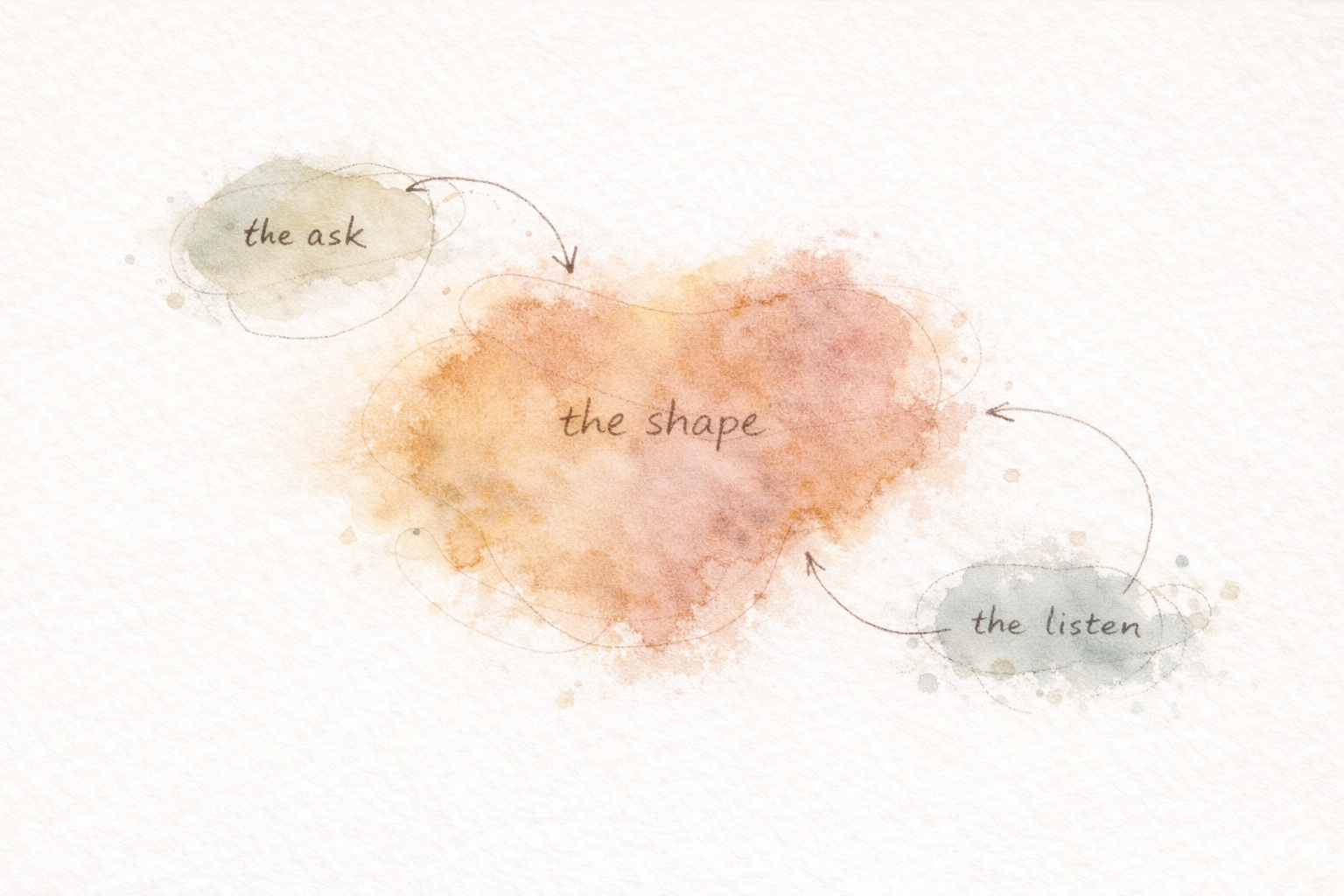
But I've watched that definition quietly expand over the past few years — and I think AI is accelerating it into something we haven't fully named yet. Craft now lives in places that aren't always visible in a file. It lives in how you ask a question in a critique. In how you write a brief that actually gives people what they need to do their best work. In how you navigate a conversation where the problem is contested and the stakes are high. In how you guide a team through ambiguity without manufacturing false clarity.
“Craft now lives in places that aren’t always visible in a file.”
And now — increasingly — it lives in how you prompt.
Writing a precise prompt that yields the right output is craft. Knowing when to override the output is craft. Understanding what to ask for, and how to frame it, and when to start over — that's craft. The fact that it doesn't look like traditional design work doesn't make it less rigorous. It makes it harder, in some ways, because the feedback loops are less familiar and the standards aren't settled yet.
The best work I've encountered in the last few years isn't just well-designed — it's well-aligned. Visually strong, yes. But also clearly framed, well-communicated, and built on a shared understanding of what it was supposed to do. That doesn't happen by accident. Alignment is something that can and should be designed. And that, too, is craft.