Prioritize Judgment Over Speed

There was a period in my career where speed was my superpower. I could take an ambiguous brief and have something on the table in hours. I could run a project forward on momentum alone. Under pressure, I got faster.
I was proud of it. Leaders noticed. Teams relied on it. AI can do most of that now. Not perfectly — not with the contextual intuition that comes from years of practice. But fast enough, and good enough, to make raw velocity a much weaker differentiator than it used to be. If your primary value is throughput, that's worth sitting with.
So the value has to shift. And I think it shifts toward judgment.
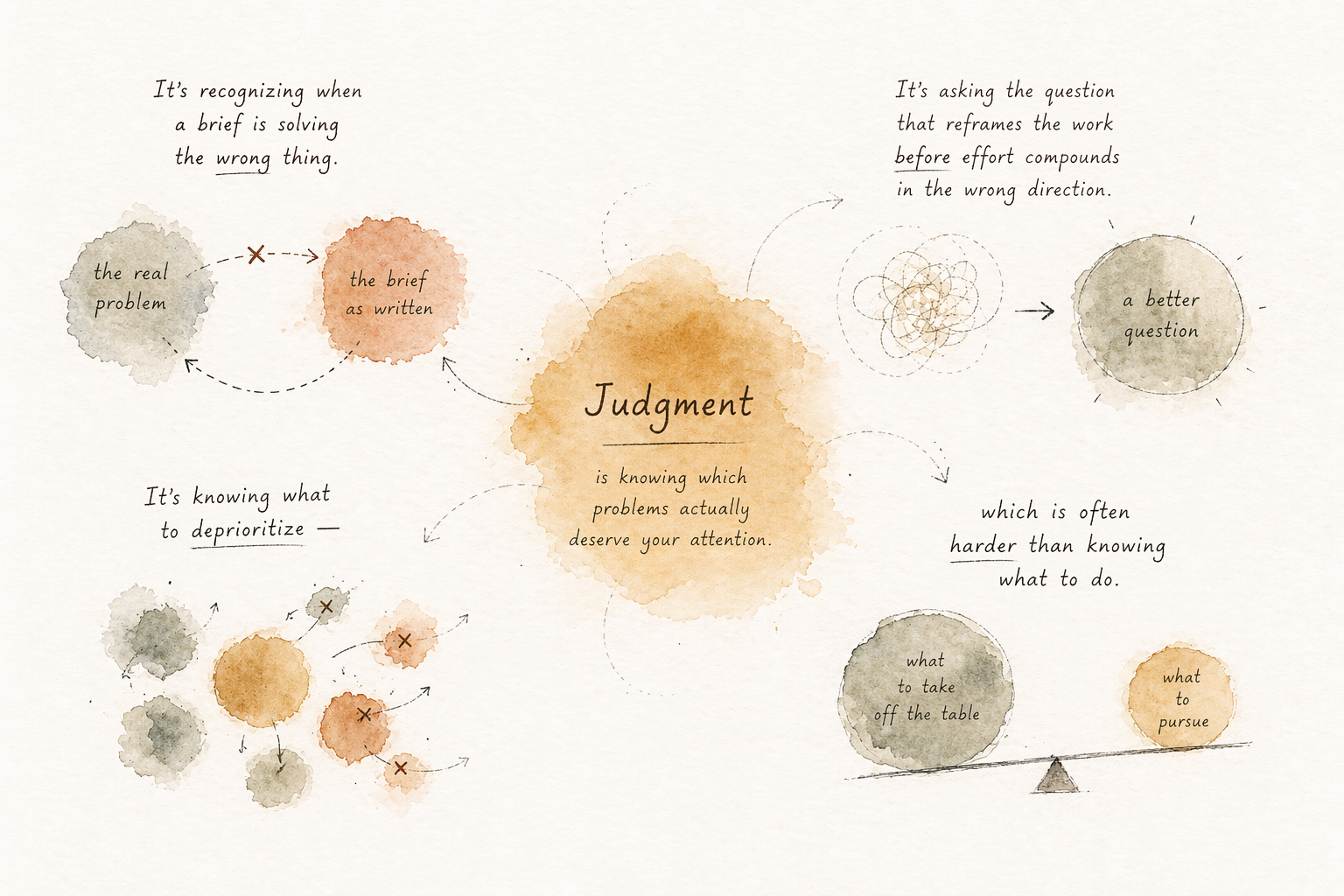
Judgment is knowing which problems actually deserve your attention. It's recognizing when a brief is solving the wrong thing. It's asking the question that reframes the work before effort compounds in the wrong direction. It's knowing what to deprioritize — which is often harder than knowing what to do.
These are things AI can assist with, but cannot own. They require accumulated experience, context, and the willingness to slow things down at exactly the moment when everyone wants to move faster. That's uncomfortable. Speed feels productive. Pausing to question the direction can feel like friction, especially in environments that solely reward output.
But direction matters more than velocity. A team moving fast in the wrong direction isn't ahead — it's just further from where it needs to be.
“But direction matters more than velocity. A team moving fast in the wrong direction isn’t ahead — it’s just further from where it needs to be.”